A Comprehensive Guide to the Various Kinds and Applications of Aluminum Castings
Aluminum castings are essential components in various industries, recognized for their lightweight and resilient properties. Various casting approaches, such as sand, pass away, and financial investment casting, deal distinct benefits customized to particular applications. Recognizing these procedures is essential for selecting the right technique for a project. Each strategy has its special benefits, influencing style and production selections. The exploration of these methods discloses a deeper understanding right into their effect on contemporary production.
Summary of Aluminum Castings
Aluminum castings are vital components in various industries, understood for their light-weight and corrosion-resistant residential or commercial properties. These castings are generated through procedures that permit detailed layouts and high dimensional precision. The adaptability of aluminum makes it a perfect selection for a variety of applications, from automobile parts to consumer electronics. As a result of its outstanding thermal and electrical conductivity, aluminum is likewise favored in electric real estates and warmth sinks. Moreover, aluminum castings can be treated with different surface finishes, enhancing their aesthetic charm and durability. The product's recyclability contributes to its sustainability qualifications, making it an environmentally pleasant alternative. In addition, the schedule of different aluminum alloys allows manufacturers to customize the mechanical residential properties to particular demands, offering enhanced stamina or boosted resistance to put on. On the whole, aluminum castings play a substantial function in modern manufacturing, contributing to the efficiency and performance of numerous products across varied markets.
Sand Casting: Process and Applications
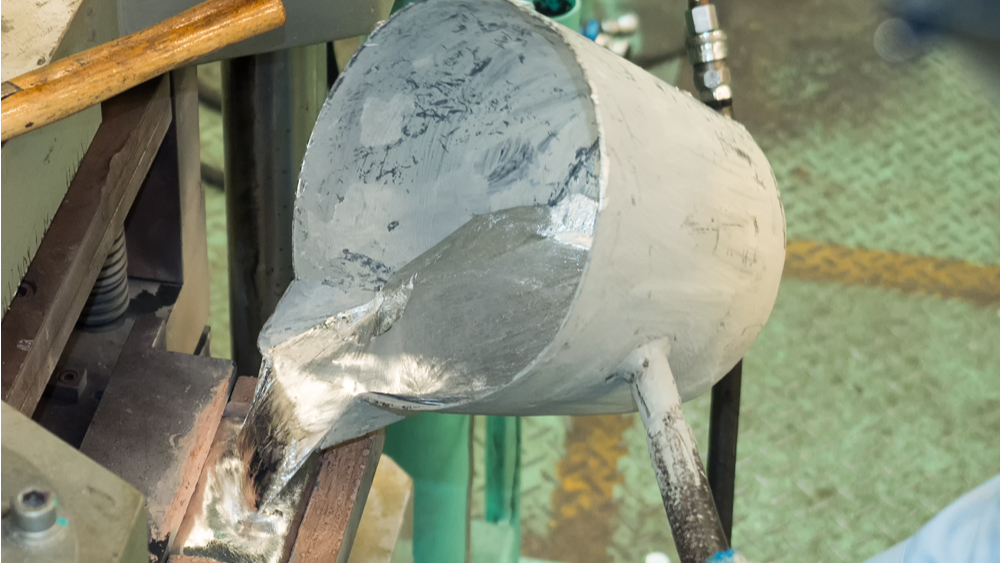
While various casting techniques exist, sand casting stays one of the most extensively utilized techniques as a result of its simpleness and adaptability. This process entails developing a mold and mildew from a mix of sand and a binding representative, enabling the production of complicated forms with high dimensional precision. The aluminum is thawed and poured into the mold and mildew, where it takes the desired form as it cools down and solidifies.
Sand casting is specifically reliable for creating big parts and low to tool volume runs, making it ideal for numerous sectors, including vehicle, aerospace, and durable goods. Its convenience enables for the casting of elaborate layouts, suiting diverse specifications. Furthermore, sand molds can be recycled several times, improving cost-effectiveness. The ease of sourcing materials and the fairly reduced configuration expenses further add to its widespread fostering. Overall, sand casting plays a pivotal function in the aluminum casting landscape, fostering innovation and performance.
Die Casting: Benefits and Makes use of
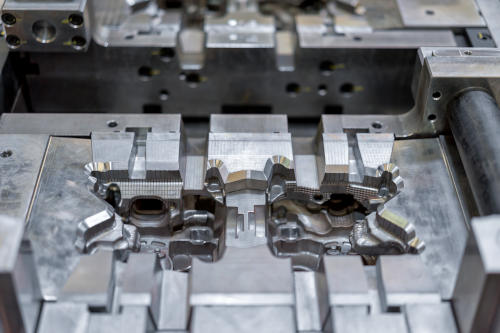
Die casting deals several benefits that make it a recommended method for generating aluminum components in various industries. This process allows for high-volume production with remarkable dimensional precision and surface area coating. The rapid solidification of aluminum during die casting results in a strong and sturdy product, minimizing the requirement for substantial machining or finishing procedures.
In addition, die casting makes it possible for the production of complex shapes and complex styles, which can be challenging to attain with various other casting methods. The efficient use products decreases waste, making it an economical option for producers.
Applications of die casting span various markets, consisting of automotive, aerospace, and consumer electronics, where light-weight and high-strength components are essential. Generally, die casting sticks out for its capability to provide quality, performance, and versatility in aluminum component manufacturing, strengthening its duty in modern manufacturing techniques.
Financial Investment Casting: Accuracy and Information
Financial investment casting is an accuracy manufacturing process that enables for intricate layouts and comprehensive functions in aluminum parts (Aluminum Casting). This method supplies numerous advantages, including high dimensional precision and a smooth surface area coating. Its adaptability makes it suitable across various sectors, from aerospace to clinical tools
Process Review
The investment casting process attracts attention for its capacity to create detailed aluminum elements with exceptional accuracy and detail. This method starts with creating a wax or polymer pattern that is a reproduction of the desired component. Next, the pattern is coated with a ceramic shell, which is after that heated to solidify. When the covering is set, the wax is dissolved, leaving a dental caries in the covering. Liquid aluminum is poured right into this tooth cavity, loading it to create the final component. After cooling down, the ceramic shell is broken away, disclosing the actors part. This procedure enables complicated geometries and fine surface finishes, making it appropriate for various applications, from aerospace to automotive markets.
Advantages of Investment Casting
One of the primary advantages of investment casting copyrights on its capability to provide high-precision elements with complex details. This technique enables for the development of complicated geometries that are commonly unattainable with other casting strategies. Financial investment casting lessens the need for considerable machining, reducing product waste and manufacturing time. In addition, it makes it possible for using numerous aluminum alloys, boosting the adaptability of the end product. The procedure is defined by a smooth surface area coating, which can cause enhanced performance and looks. Financial investment casting is well-suited for both small and huge manufacturing runs, suiting a wide range of sectors. Overall, its accuracy and performance make financial investment casting a preferred choice for manufacturing components needing exact specs.
Applications in Market
While various casting methods serve specific objectives, investment casting attracts attention for its widespread applications throughout multiple sectors because of its unmatched precision and information. This technique is specifically favored in aerospace and automotive markets, where complex elements need precise specs for safety and security and performance. Financial investment casting enables the production of complicated shapes, such as wind turbine blades and engine parts, that typical approaches can not accomplish. Furthermore, clinical device producers make use of investment casting navigate to this website for creating very comprehensive tools and implants, guaranteeing biocompatibility and functionality. The electric and electronic devices markets likewise profit, producing parts like housings and connectors that require fine resistances. In general, investment casting's versatility and precision make it an essential process in modern production across varied areas.
Comparison of Casting Methods
Sand Casting Advantages
Sand casting uses several advantages over other casting techniques, specifically when it comes to versatility and cost-effectiveness. This click here for more technique permits the production of complicated forms and huge parts without the requirement for pricey tooling. In addition, the sand made use of in this procedure is conveniently available and low-cost, making it an eye-catching choice for both tiny and big production runs. The capability to recycle sand advertises sustainability and minimizes product expenses. Sand casting suits a selection of aluminum alloys, boosting its flexibility for various applications. The procedure is also relatively straightforward, which contributes to shorter lead times and versatility in manufacturing. These aspects make sand casting a preferred choice for lots of markets seeking reliable and economical remedies.
Die Casting Performance
Although various casting techniques are available, pass away casting sticks out for its performance, especially in high-volume production circumstances. This method utilizes high-pressure pressures to infuse molten aluminum right into a mold and mildew, leading to rapid cycle times and consistent product high quality. Contrasted to sand casting and financial investment casting, die casting substantially minimizes material waste and enables elaborate designs with limited tolerances. The ability to produce big amounts of components promptly makes it perfect for industries such as automotive and consumer goods. In enhancement, die casting can assist in using less expensive alloys, additionally improving its cost-effectiveness. Overall, the efficiency of die casting makes it a preferred choice for suppliers intending to optimize both manufacturing speed and quality.
Financial Investment Casting Accuracy
Financial investment casting is widely acknowledged for its outstanding precision in creating complex forms and detailed details. This technique involves creating a wax pattern, which is coated in a ceramic covering, and consequently disappeared, leaving a specific cavity for liquified aluminum. Compared to other casting techniques, such as sand casting or die casting, investment casting uses tighter tolerances and a smoother surface coating. This accuracy makes it ideal for applications calling for high accuracy, such as aerospace and clinical gadget parts. While the first configuration prices might be higher, the lasting advantages consist of minimized machining demands and consistent quality. Subsequently, financial investment casting sticks out as a preferred selection for detailed layouts and requiring requirements in numerous sectors.
Sector Applications of Aluminum Castings
Aluminum castings play an important function across numerous markets because of their lightweight, corrosion-resistant homes and excellent strength-to-weight proportion. In the vehicle field, aluminum castings are thoroughly made use of for engine elements, transmission housings, and structural components, adding to fuel effectiveness and efficiency. The aerospace sector gain from aluminum castings in aircraft frameworks, engine mounts, and indoor fittings, where weight reduction is important.
In addition, the customer electronics sector makes use of aluminum castings for units and elements, enhancing resilience while keeping a smooth visual. In the construction industry, aluminum castings are used in building aspects, home window frameworks, and architectural supports, offering strength against weathering. Furthermore, the marine sector prefers aluminum castings for watercraft hulls and fittings as a result of their resistance to saltwater deterioration. Generally, aluminum castings supply flexible site here services, satisfying diverse requirements throughout different applications while maintaining high efficiency and dependability.
Future Patterns in Aluminum Casting Modern Technology
As industries proceed to evolve, improvements in aluminum casting technology are poised to improve making procedures and item layout. Emerging trends include the combination of automation and artificial intelligence, enhancing manufacturing and boosting high quality control. 3D printing is also acquiring grip, enabling for extra intricate geometries and reduced waste, thus advertising sustainability. Additionally, the development of high-performance alloys is broadening the applications of aluminum castings, making it possible for sectors to meet extensive performance criteria.
An additional substantial fad is the increasing focus on recycling and the round economy, with developments targeted at recycling aluminum scrap effectively. Market players are likewise purchasing smart production methods, integrating IoT for real-time surveillance and predictive upkeep. Developments in surface therapy innovations are enhancing the durability and visual charm of aluminum castings. Collectively, these fads signify a transformative period in aluminum casting, driving effectiveness, sustainability, and advancement across different industries.
Frequently Asked Concerns
What Are the Ecological Effects of Aluminum Casting Processes?
The environmental influences of aluminum casting processes include greenhouse gas emissions, power consumption, and waste generation. These variables add to air and water pollution, motivating the requirement for lasting methods and boosted resource administration in the market.
How Can Aluminum Castings Be Recycled Efficiently?
Effective recycling of aluminum castings involves collecting scrap, getting rid of contaminants, and melting the aluminum to generate brand-new castings. This procedure conserves power, decreases waste, and minimizes ecological effects, promoting an extra sustainable manufacturing cycle.
What Is the Normal Life-span of Aluminum Castings?
The normal life-span of aluminum castings differs significantly, typically long lasting between 20 to 50 years relying on ecological elements, alloy make-up, and application. Their sturdiness makes them suitable for different requiring industrial and structural usages.
Exist Any Wellness Risks Related To Aluminum Casting?
Concerns relating to wellness dangers related to aluminum casting include potential exposure to fumes and dirt. Extended breathing might lead to breathing problems, while skin contact can create irritability. Appropriate precaution are important to minimize these dangers.
Just How Do Aluminum Castings Contrast to Other Materials in Toughness?
Aluminum castings exhibit a desirable strength-to-weight ratio compared to several products, consisting of steel and plastics (Aluminum Casting). They are light-weight yet solid, making them ideal for applications calling for sturdiness without extreme weight, such as automobile and aerospace elements